I can’t think of a better starting point for learning about quality improvement than the International Forum on Quality and Safety in Healthcare. Run by Institute for Healthcare Improvement (IHI) in Boston and the BMJ this huge quality improvement Forum attracts interest and expertise from across the world, with something for everybody, from beginner to quality improvement champion.
This year the Forum ran from Wednesday 26 to Friday 28 April in London. The Wednesday was an “experience day” – the Forum itself was on Thursday and Friday, with the theme ‘Ingniting Collective Excellence’. To quote from the Forum website: “We focus on how the power of collaboration can inspire all parties, including patients, families, new healthcare professionals and improvement leaders to deliver top quality, person-centred care in a sustainable framework.” This was an ambitious theme that anybody working in, or cared for by healthcare systems across the world, could get behind.
I have attended two Forums – Paris 2008 and Gothenburg 2016. A novice in Paris (presenting research rather than quality improvement), I was pleased to present quality improvement work on supporting low income families in Leith, Scotland at the Gothenburg Forum, which coincided with publication of that work in BMJ Quality Improvement Reports.
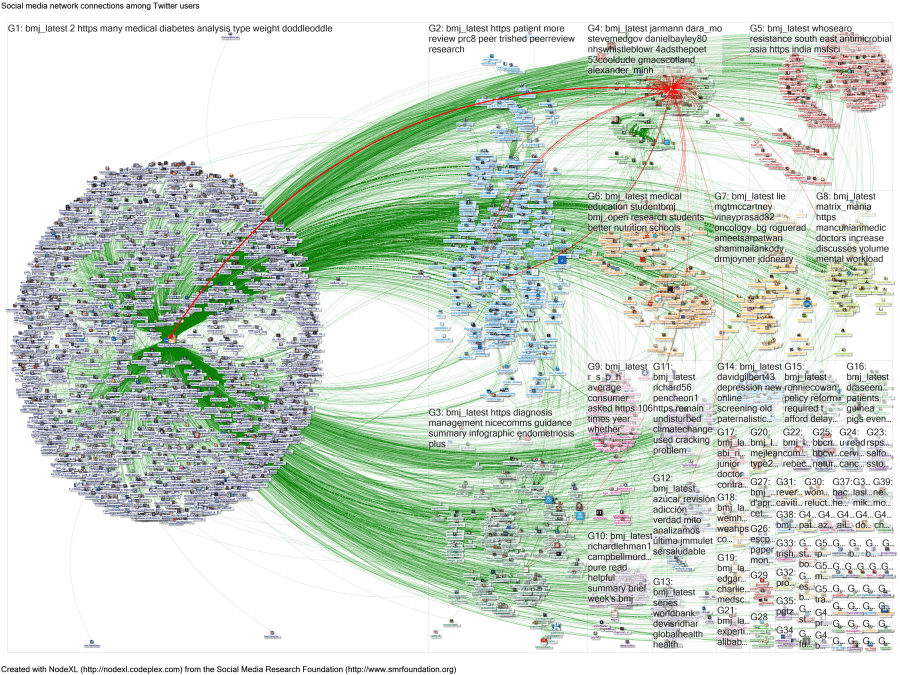
This year I wasn’t able to attend the Forum, but took some time to watch the tweets, retweet some of these tweets, post some ideas of my own, and run a “big data” analysis of the Forum tweets (identified using #Quality2017 hashtag) using NodeXL. See previous blog post and BJSM editorial for more on the methodology used here.
Colleagues interested in quality improvement have been early adopters of social media – almost evangelical in their promotion of Twitter for learning, networking and broadcasting. It is no surprise, therefore, that there are rich pickings from the tweet from the Forum. See Gill Phillip’s summary, capturing a flavour of the tweets. The snapshot presented in this blog is presented purely as an illustration of the potential (and limitations?) of big data.
Also check out the top 40 tweets in this Wakelet summary.
Continue reading “Quality2017: watching in via Twitter” →














 #ScotPublicHealth